Crypto Ledger Offline Security: Cold Storage Protection
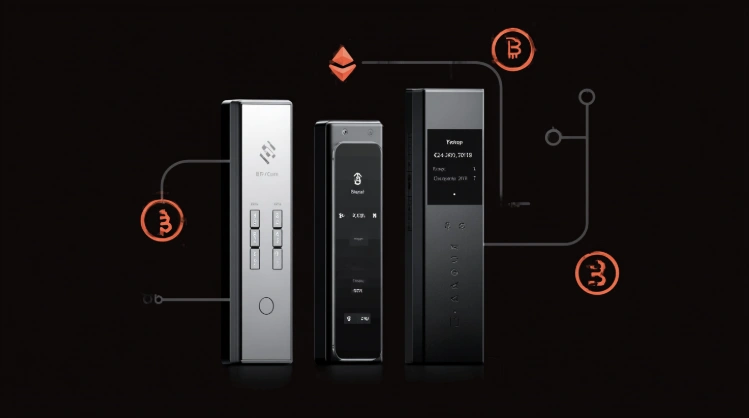
Crypto Ledger Offline Security implements cold storage principles that keep private keys permanently disconnected from the internet, eliminating exposure to online attack vectors. The hardware wallet stores cryptographic secrets in an isolated environment that never connects directly to networks, web services, or potentially compromised software. This offline architecture provides the strongest protection available for cryptocurrency assets against remote attacks.
Crypto Ledger cold storage security reflects the fundamental principle that keys which never touch the internet cannot be stolen through the internet. The hardware wallet connects to companion software only for specific operations, and even then transmits only unsigned transactions and signatures without ever exposing private keys. Understanding this offline model explains why hardware wallets provide superior protection compared to any internet-connected wallet solution.
Offline Security Model of Crypto Ledger
Crypto Ledger offline security maintains strict separation between private key storage and internet-connected systems. The security model recognizes three distinct environments with different trust levels:
- Hardware wallet (offline): Contains private keys in the secure element, never connects directly to internet
- Companion software (online): Runs on internet-connected devices, handles network communication and user interface
- Blockchain networks (public): Distributed ledgers where transactions are recorded and assets exist
The hardware wallet remains offline except when briefly connected to the companion software for transaction signing. Even during connection, the private keys stay within the secure element while only signatures are transmitted to the online environment.
Why Offline Storage Reduces Risk
Crypto Ledger cold storage security provides protection through physical network isolation:
- Remote hackers cannot access devices that are not connected to networks
- Malware requires network communication to exfiltrate stolen data
- Phishing attacks cannot reach offline storage environments
- Server breaches cannot affect locally stored keys
- Man-in-the-middle attacks have no network path to exploit
The attack surface for offline storage is limited to physical access scenarios, which require significantly more resources and risk for attackers compared to remote exploitation.
Offline storage statistics demonstrate the security advantage:
| Attack Vector | Online Wallets | Hardware Wallets |
|---|---|---|
| Remote exploitation | High risk | Not applicable |
| Malware theft | High risk | Protected |
| Phishing | High risk | Protected |
| Server breach | Applies to exchanges | Not applicable |
| Physical theft | Medium risk | Protected by PIN |
| Social engineering | High risk | Reduced risk |
Air-Gapped Operations and Network Isolation

Crypto Ledger offline security extends beyond simple disconnection to implement true air-gapped operations for the most sensitive functions:
- Private key generation occurs entirely within the hardware wallet with no external input
- Recovery phrase display appears only on the hardware screen, never on connected devices
- PIN entry happens on the hardware wallet, invisible to companion software
- Cryptographic signing executes inside the secure element without network exposure
The air gap between key material and networked systems cannot be bridged by software attacks. Even complete compromise of the companion application cannot access secrets that never leave the hardware device.
Connection Modes and Security Implications
Crypto Ledger cold storage security maintains offline protection even during necessary device connections:
USB-C Connection:
- Physical cable provides limited bandwidth controlled by secure element
- Only predefined message types can traverse the connection
- Private keys cannot be transmitted through the USB interface
- Connection required for firmware updates and transaction signing
Bluetooth Connection (Nano X, Stax, Flex):
- Encrypted BLE communication for mobile device pairing
- Same security restrictions as USB connections
- Pairing requires physical confirmation on hardware wallet
- Convenience feature that does not compromise offline key storage
Both connection modes maintain the fundamental offline security model by transmitting only non-sensitive data while keys remain isolated in the secure element.
Cold Storage Best Practices
Crypto Ledger offline security achieves maximum effectiveness when combined with proper operational practices:
- Keep the hardware wallet disconnected when not actively signing transactions.
- Store the device in a secure location when not in use.
- Maintain the recovery phrase backup in a separate secure location from the device.
- Never enter the recovery phrase on any internet-connected device.
- Verify all transaction details on the hardware screen before confirming.
- Keep firmware updated to receive security patches (requires brief connection).
- Consider multiple devices for separation of holdings (hot wallet for daily use, cold for savings).
- Use the passphrase feature for additional hidden wallet protection.
- Establish clear procedures for device access in emergency or inheritance situations.
- Regularly verify recovery phrase accuracy without entering it digitally.
These practices complement the hardware offline security with proper operational security (opsec) for comprehensive protection.
Offline vs Online Security Comparison
Crypto Ledger cold storage security provides measurable advantages over online alternatives:
| Security Factor | Ledger Hardware (Cold) | Software Wallet (Hot) | Exchange (Custodial) |
|---|---|---|---|
| Key exposure to internet | Never | Always | Exchange controlled |
| Malware vulnerability | None | High | N/A (no local keys) |
| Remote attack surface | None when disconnected | Always present | Always present |
| Physical security | PIN + wipe | Device encryption | N/A |
| Self-custody | Full | Full | None |
| Recovery options | 24-word phrase | Varies | Exchange support |
| Counterparty risk | None | None | High |
Cold storage through hardware wallets provides the security benefits of keeping assets offline while maintaining the ability to transact when needed. The brief connection periods for signing do not compromise the fundamental offline protection because private keys never traverse the connection.
Long-term holders particularly benefit from cold storage, as assets can remain completely offline indefinitely while retaining full owner control through the recovery phrase backup.
For hardware security details, see our Crypto Ledger Hardware Security guide. For transaction signing information, visit Crypto Ledger Transaction Signing.